Our picks, beyond the numbers
5 games like Among Us we would recommend for different reasons
Among Us turned a short meeting on a cartoon spaceship into one of the defining party games of its generation, and most of what makes it work happens in that meeting rather than during the tasks. Someone's story doesn't add up, someone else is vouching for the wrong person, and the vote that follows is the whole point. We picked these games for that same feeling in different costumes: lying convincingly, reading other people well, or getting the fun of a shared lobby without any killing at all.
A couple of these take the hidden-impostor format and push it somewhere new, one goes all the way back to where that format started, and a few drop the deception entirely in favor of different ways to mess with friends. Here's where we'd send an Among Us player next.
Goose Goose Duck
Our first choice for more of the same social deduction
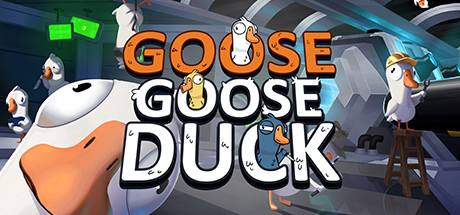
Goose Goose Duck is the free-to-play game most people already compare to Among Us, and the comparison holds up: geese complete chores around a map while a smaller number of hidden ducks try to pick them off without getting caught. What sets it apart is the sheer number of extra roles layered on top of the basic setup, from sheriffs to tricksters to a duck with their own private objectives.
We'd point an Among Us player here first simply because it costs nothing to try and the core loop will feel instantly familiar — tasks, meetings, votes — while the expanded roster of roles gives discussions more to argue about than 'where were you.' It's also had a long run of free content drops, so there's more to dig into than a single map and role list.
The extra roles are also the catch: a lobby can turn into a tangle of overlapping abilities that's a long way from Among Us's simpler two-sided setup. If you liked Among Us precisely because it was easy to explain to new players in thirty seconds, Goose Goose Duck's deeper roster might feel like more homework than you wanted.
Town of Salem
For the mafia-game roots of the whole format
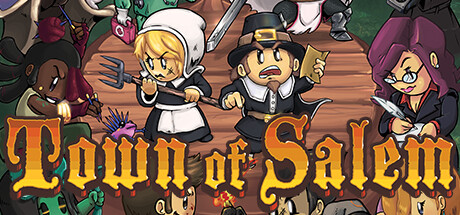
Town of Salem predates Among Us by several years and popularized a lot of what the genre now takes for granted, just without the spaceship: it's a text-based mafia game with a much deeper bench of roles, from Jailor and Vigilante to a whole roster of killing, investigative and support archetypes working against each other in the dark.
We'd recommend it to an Among Us player who wants to see where the format actually came from, and who's ready to trade movement and tasks for pure conversation and role-ability timing. Every action resolves at night and every accusation happens through typed discussion, which puts the entire game on reading what people write rather than how they move around a map.
There's no 2D spaceship to walk through and no visual tasks to perform — everything plays out as text, which asks for a different kind of patience than Among Us's quicker, more visual pace. Go in expecting a slower, wordier game built almost entirely around deduction rather than movement.

Gnosia
For the deduction loop without needing other people online
Gnosia takes the Among Us-style format and turns it into something you can actually play alone: you're stuck on a looping spaceship with a cast of AI crewmates, replaying the same cycle of discussion and voting over and over while trying to identify the alien Gnosia hiding among them, with your own strategy and the characters' trust in you evolving across runs.
We like it for anyone who's drawn to the suspicion and accusation of Among Us but doesn't always have five other people free at the same time. It reads closer to a visual novel with a roguelite structure than a party game, and watching the same cast of characters respond differently to your choices run after run gives it a different kind of hook than a single meeting ever could.
It's entirely single-player, so the unpredictability of real human liars — the thing a lot of people actually love about Among Us — isn't here. Choose Gnosia when you want the shape of the deduction loop on your own schedule, not a replacement for a live group.

Witch It
For hiding in plain sight instead of lying at a meeting
Witch It swaps secret murder for a disguised hide-and-seek: Witches transform into ordinary objects scattered around the map while Hunters try to spot the one prop that doesn't quite belong before time runs out. There's still a hidden role and still a small group trying to catch someone pretending to be something they're not — just no meeting table and no vote at the end.
We'd choose it for an Among Us player who likes the tension of a secret role but is just as happy to get it through stealth and clever hiding spots as through conversation. It rewards a different skill — picking a convincing disguise and staying still at the right moment — rather than talking your way out of suspicion.
There's no discussion phase at all, so if the meetings and the arguing are what you actually love about Among Us, this trades that away entirely for pure stealth. Treat it as a cousin that kept the hidden-role idea and left the social deduction behind.
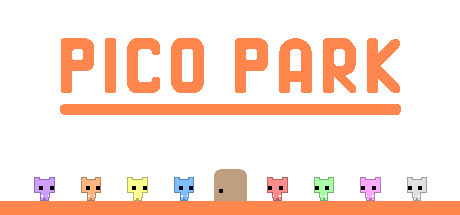
Pico Park
For the same small lobby, minus the lying
Pico Park strips the deception out of the formula completely and asks a small group to actually work together, solving puzzle rooms where one person moving at the wrong moment can trap the whole team. It keeps the same scale and the same sense of a tight-knit lobby figuring something out together that makes an Among Us session fun, just pointed at cooperation instead of suspicion.
We'd suggest it for a group of Among Us regulars who want a palate cleanser — something that uses the same small-group energy without anyone having to pretend, lie or get voted out. The satisfaction here comes from a team finally clicking on a puzzle, not from unmasking a liar.
There's no impostor, no vote and no betrayal mechanic anywhere in it, so it's a genuinely different kind of game wearing a similar party-sized shape. Save it for when the group wants to cooperate rather than accuse each other for a change.