Our picks, beyond the numbers
5 games like Stardew Valley we would recommend for different reasons
Stardew Valley turns a short list of chores into something worth protecting: water the crops, say hello to a neighbor, check whether today is finally the day the mines give something up. None of it is urgent on its own, but strung together across a season it adds up to a life that feels like yours. Looking for games like Stardew Valley means asking what part of that life mattered most, because the farm, the town and the quiet sense of progress are really three separate pleasures wearing one overalls-and-a-watering-can outfit.
Some players want another valley to plant in. Others are more attached to the people waiting at the general store, or to the specific feeling of turning an overgrown plot into something that looks cared for. We tried to split our picks along those lines rather than just ranking farming sims against each other, so a couple of these lean further into magic, crafting or exploring a new kind of settlement instead of repeating Pelican Town with different sprites.
None of the five below is Stardew Valley with a new coat of paint, and we would be suspicious of anything that claimed to be. Here is where we would send a Stardew Valley player next, and what each one trades away to get there.
Coral Island
For a farm with an ocean attached
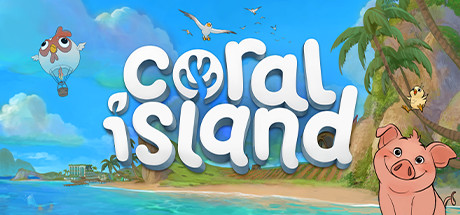
Coral Island keeps the basic shape of a Stardew day — crops, animals, a town full of people to get to know — and moves the whole thing to a tropical island with an underwater Merfolk Kingdom beneath it. We'd point a Stardew player here first because the daily loop translates almost without friction, while the setting gives it a personality the valley never had: diving, restoring reefs and meeting an entire society that lives beneath the waterline.
It also scales up the social side of the format. Up to four players can farm the same island together online, which turns the comforting solo routine into something closer to a shared project if that's what you're after.
The trade-off is tone and presentation: Coral Island's 3D look and busier systems (the merfolk storyline alone is a substantial side-game) make it a bigger, less intimate experience than Stardew's tight pixel-art valley. Go in expecting more scope, not a smaller, cozier cousin.
Roots of Pacha
For building a community from nothing
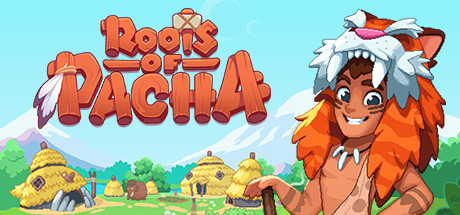
Roots of Pacha pushes the farming-sim idea backward in time, into the Stone Age, where you're not just working a plot but helping an entire village figure out farming, domestication and shared customs for the first time. We like it as a recommendation specifically because it reframes the genre's usual question — what do I build today — as a communal one: what does this whole settlement discover next.
That makes it a good fit for a Stardew player whose favorite part was watching Pelican Town's community take shape around them, rather than the solitary act of tending a single farm.
Its stone-age setting means no money economy, no shops in the usual sense, and a village-wide sense of progress rather than one family's plot. If you specifically miss Stardew's cash-and-upgrade loop, that absence will take some adjusting to.
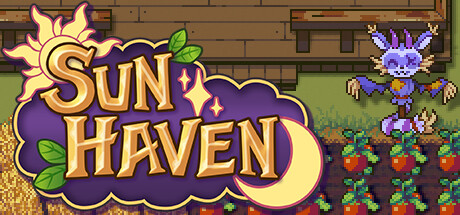
Sun Haven
For farming with magic and dragons stirred in
Sun Haven answers a question Stardew only gestures at: what if the farm sim had actual spellcasting, dungeons and dragons alongside the crop rotation? It layers combat, mining and magic on top of a familiar farming-and-relationships base, and it supports online co-op for up to eight people, considerably more than Stardew's four.
We'd choose it for someone who wanted Stardew's comfort but kept wishing the combat and fantasy elements carried more weight, since here they're not an occasional dungeon trip but a real second half of the game.
All that extra scope comes at the cost of focus — Sun Haven asks more of a new player than Stardew's gentle onboarding does, between its class system, combat and the sheer number of mechanics layered onto the farm. Expect a busier, more ambitious game rather than a quieter one.

My Time at Portia
For a workshop instead of a field
My Time at Portia swaps Stardew's crops for a workshop: you're rebuilding your late father's business in a sunlit, post-apocalyptic town, which means commissions, crafted machines and building projects take the place of planting and harvesting as the thing you check on every morning.
We like it for a Stardew player who always preferred the crafting and building side of the valley to the actual farming, and who wouldn't mind trading a few crop seasons for blueprints and assembly lines, with ruins to explore and fight through on the side.
It's a single-player game with no co-op option at all, so this isn't the pick if sharing the save file matters to you. Its post-apocalyptic backdrop also gives Portia a stranger, more science-fiction-tinged mood than Stardew's straightforwardly rural valley.
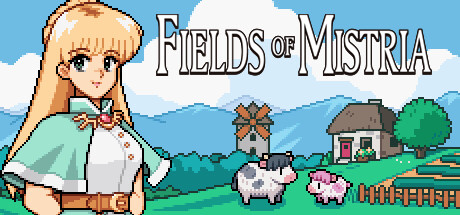
Fields of Mistria
For the most direct dose of the same comfort
Fields of Mistria is the pick that leans hardest into Stardew's own tone on purpose: an earthquake-damaged village called Mistria, a homestead to rebuild, and days built around farming, fishing and getting to know the townsfolk, with a touch of magic and romance woven through.
We'd send a Stardew player here first if what they actually want is more of exactly that feeling rather than a fresh angle on it — the game wears its nostalgic farming-sim roots openly, and it shows in how quickly the loop feels familiar.
It's single-player only, with no co-op mode listed, and its world is smaller and newer than Stardew's, which means less accumulated content from years of free updates. Think of it as the closest cousin here, not a bigger or stranger alternative.