Our picks, beyond the numbers
5 games like Elden Ring we would recommend for different reasons
Elden Ring has a knack for making a distant castle feel like an invitation and the next boss feel like a personal grudge match. But the Lands Between offer more than hard fights: there is the thrill of finding an unexpected path, experimenting with a build, and piecing together a world that rarely explains itself. We looked for games that carry one of those feelings forward, not just the difficulty.
A couple of these are the usual next stops for FromSoftware fans; others take the formula somewhere the Lands Between don't go, whether that's a co-op shooter or a sprawling, interconnected kingdom from earlier in the studio's history. Here's where we'd send an Elden Ring player next, and why.

Dark Souls III
Our first choice for more FromSoftware combat
If Elden Ring's bosses and deliberate combat are what you miss most, Dark Souls III is where we would start. Choosing when to attack, when to retreat and when to spend your stamina remains at the heart of every encounter, and its crumbling kingdom of Lothric has that unmistakable FromSoftware atmosphere: beautiful, bleak and full of questions it never quite answers.
We'd point an Elden Ring player here first because the fundamentals transfer almost directly — stamina management, weapon arts, the rhythm of learning a boss. It's the safest recommendation on this list precisely because so little needs re-learning.
The trade-off is scale and freedom. The world is far more directed than the Lands Between: when a boss stops you, there are fewer side paths to ride off down and return to later. We think that tighter structure is a feature, not a flaw, if you want the fights themselves to stay front and center rather than sharing attention with an open map.
Sekiro: Shadows Die Twice
For players who want to master the blade
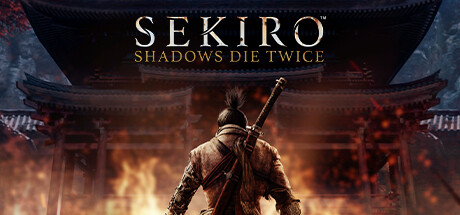
Sekiro gives Elden Ring players another FromSoftware world full of dangerous enemies and hard-won victories, but changes the whole approach to a fight. As Wolf, a shinobi with a prosthetic arm, you lean on swordplay, precise deflections and breaking an opponent's posture rather than rolling, blocking or switching between a dozen builds.
We think it's a brilliant next choice specifically if the boss fights were your favorite part of the Lands Between, and you want that tension distilled into something even more exacting. There's a real sense of mastery in finally reading an enemy's rhythm well enough to parry it on instinct.
The trade-off is character freedom: you play an established protagonist instead of creating your own Tarnished, and there's no build variety to fall back on when a fight goes badly — the game asks you to get better at this specific skill, not find a workaround. If flexible character-building is why you love Elden Ring, that absence will be the biggest adjustment.

Lies of P
For a darker kind of fairy tale
Lies of P takes the demanding fights and dark fantasy atmosphere Elden Ring fans will recognize and sends them into Krat, a Belle Époque city unraveling into madness. You play a puppet built by Geppetto, forced to decide again and again whether to lie or tell the truth as the city's elaborate streets turn hostile around you.
We love the contrast between its elegant, ornate setting and the unsettling, mechanical enemies that inhabit it — it's a soulslike with a genuinely distinct visual identity rather than a reskin of a familiar formula.
Its journey is more directed than Elden Ring's open world, closer to Dark Souls III's structure than the Lands Between's sprawl. We'd recommend it if you want a strong sense of place and challenging encounters, but not if the freedom to ride off across a huge map is your main priority.

Dark Souls: Remastered
For a world that connects in surprising ways
Dark Souls: Remastered shares Elden Ring's mysterious fantasy atmosphere and the tension of venturing into dangerous territory with limited resources. What makes Lordran special to us is the pleasure of discovering how its areas connect — a newly opened shortcut or elevator can change the way you see a place you thought you already understood.
That sense of a world folding back in on itself is something even Elden Ring, for all its scale, doesn't fully replicate. We'd choose this for a player who wants interconnected exploration and atmosphere over sheer open-world freedom.
It's an older and more compact game, with a slower, stiffer feel than Elden Ring's refined combat. Go in expecting a rougher, more deliberate pace — the reward is a map that rewards memorizing it in a way few other games manage.

Remnant II
For a co-op adventure with guns
Remnant II keeps the appeal of dangerous enemies, demanding boss fights and experimenting with a build, but swaps Elden Ring's swords and spells for a shooter-led adventure across a handful of distinct, dangerous worlds. It's a soulslike in structure and difficulty, built from the ground up around guns instead of melee.
We especially like it as a pick for friends who want to face those challenges together — it supports online co-op for up to three players, which turns the usual soulslike tension of a tough encounter into something you can share rather than face alone.
Gunplay and co-op are far more central here than in Elden Ring, and the worlds are divided into separate campaigns rather than one continuous landscape you can wander. Pick this for a group adventure with a different combat identity, not for a direct recreation of the Lands Between.