Our picks, beyond the numbers
5 games like Celeste we would recommend for different reasons
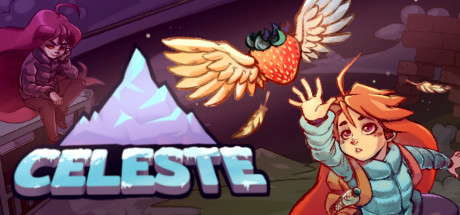
Celeste does a lot with very little: a jump, a dash and a wall-climb are the entire toolkit, and the whole game is built around learning exactly what that toolkit can do under pressure, one difficult screen at a time. The climb up Celeste Mountain is also Madeline's own story, which gives its hardest rooms a weight that pure difficulty alone wouldn't carry. We looked for games that chase some piece of that — the precision platforming, the pattern-memorization, or the idea of a mountain worth climbing for a reason — from a few different angles.
Some of these are the genre's acknowledged classics that came before Celeste, others isolate one piece of its challenge and build an entire game around it, and a couple take the exploration and secret-hunting side of its B-sides somewhere new. Here's where we'd send a Celeste player next.

Super Meat Boy
Our first choice for the genre Celeste grew out of
Super Meat Boy is one of the games that proved brutally hard, instant-restart platforming could be genuinely fun rather than just punishing, and it's widely credited as a foundation the whole modern precision-platformer genre — Celeste included — was built on top of.
We'd point a Celeste player here first to see where that formula started: tight, deliberately unforgiving levels, instant respawns that keep failure from feeling like a setback, and a steady escalation that rewards pure reflexes and memorization.
It leans entirely on reflexes and level memorization with no dash mechanic to speak of and none of the narrative weight Celeste wraps around its difficulty — there's no story-driven emotional arc here, just the challenge itself. Go in for the platforming lineage, not for Madeline's story.

Jump King
For the single hardest part of platforming, stretched into a whole game
Jump King isolates the one moment every precision platformer eventually hinges on — committing to a jump you can't take back — and builds an entire tower-climbing game out of nothing else. There's no run button, no dash, just the king and a charge-and-release jump that has to be judged exactly right.
We like it for a Celeste player whose favorite part of the mountain was the tension right before a committed jump. Jump King stretches that single feeling across a whole climb, with the same high-stakes focus but none of Celeste's other systems around it.
There's no dash, no story and no forgiving checkpoint system — one bad jump can cost you most of a climb's progress, which makes it a much harsher experience than Celeste's generous retry structure. Go in expecting frustration as part of the point, not a gentler cousin.

Dustforce
For turning movement itself into a scoring game
Dustforce turns platforming into a scoring game, rating every run on how fluidly and stylishly you move through a level rather than just whether you reached the end. Chasing a clean S-rank through a level rewards the same kind of movement mastery that makes a tricky Celeste screen click once you finally land it.
We'd recommend it to a Celeste player who liked the feeling of a dash-and-climb sequence finally coming together, and wants a game built entirely around chasing that feeling of fluid, correct movement over and over on the same level.
Its focus on combos and S-ranks rewards replaying levels purely for style rather than Celeste's climb-and-complete structure, and there's no story or character arc attached. It's a pick for movement obsessives first, not for anyone drawn to Celeste's narrative.

Leap Year
For the curiosity and secret-hunting side of the mountain
Leap Year leans on exploration and puzzle-solving over raw platforming difficulty, built around the same kind of curiosity that pulls players into Celeste's hidden side areas and secret berries rather than straight to the summit.
We'd choose it for a Celeste player whose favorite moments were wandering off the main path, wondering what was behind a strawberry or a hidden room, rather than the toughest B-side gauntlets. Its slower, Metroidvania-style pacing rewards that same instinct to poke around.
The platforming challenge itself is considerably gentler than Celeste's hardest rooms, trading tight execution for figuring out where to go next. Pick this when exploration is what you actually missed, not when you're craving Celeste's toughest dash sequences.

Sanabi
For tight movement wrapped around its own story
Sanabi channels the same commitment to precise platforming movement through a grappling-hook arm that launches you across a cyberpunk city, with a story-driven arc carrying the game the way Madeline's journey carries Celeste's mountain.
We'd suggest it to a Celeste player who wants that same sense of a personal story resolving alongside the mechanical challenge, but is curious what tight movement feels like built around a swinging hook instead of a dash and climb.
Its chain-hook combat against enemies and dystopian setting give it a very different flavor than Celeste's quiet, character-focused climb, and the platforming skill it demands is distinct from dash-timing. Expect a louder, more action-driven version of the same emotional idea.