Rainbow Six Siege
Our first choice for a different kind of tactical team fight
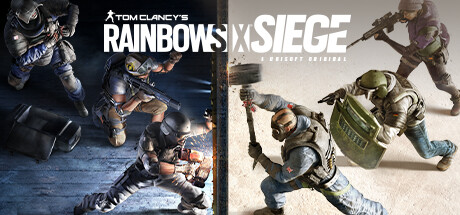
Rainbow Six Siege keeps Counter-Strike 2's round-based, one-life tension but builds the whole fight around destructible environments and asymmetric roles: defenders spend the prep phase fortifying and trapping a site, while attackers breach walls, rappel up the outside and send in drones to scout before committing.
We'd choose it for a CS2 player who wants that same round-to-round discipline but is curious what happens when the map itself can be torn open — a wall you thought was cover one round can be gone the next, and operator-specific gadgets add a layer CS2's more uniform loadouts don't have.
There's no buy-menu economy quite like CS2's, and operator abilities mean matchups are less about pure aim and positioning than CS2's cleaner 5v5. It's free to play, so trying it costs nothing — a good reason to pick it first if destructible, gadget-driven tactics sound more interesting than another round of the same formula.

Insurgency
For close-quarters tension without the HUD
Insurgency strips away the crosshair entirely and leans into realistic weapon handling, close-quarters firefights and objective modes — capturing territory, destroying weapon caches, escorting a high-value target — across matches that can run up to 32 players rather than CS2's tight 5v5.
We like it for the player whose favorite part of Counter-Strike 2 is the moment-to-moment tension of a gunfight with real stakes, but who wants that feeling spread across bigger, more objective-driven matches, plus several dedicated co-op modes against AI if you'd rather play with friends than against strangers.
Losing the crosshair and CS2's tight round economy changes the rhythm considerably — aiming relies on gun models rather than a reticle, and the larger player counts mean individual rounds carry less weight than a CS2 half. Go in expecting a grittier, more chaotic version of the same close-quarters tension, not a direct CS2 replacement.

Counter-Strike: Source
For the version that bridged old and new
Counter-Strike: Source rebuilt the original game on Valve's Source engine back in 2004, carrying the same team-based objective rounds forward with updated graphics and physics for its era. For a CS2 player curious about the series' own history, it's the version that sits right in the middle.
We'd point someone here who wants to feel how much of CS2's foundation — the maps, the basic round structure, the team-based objectives — was already locked in two decades ago, and who's curious how the physics and movement of that era compare to CS2's modern feel.
Its older engine means simpler recoil and movement than CS2's refined systems, and its active playerbase is a fraction of CS2's. Treat it as a history lesson worth a few rounds, not a serious ongoing alternative to your main competitive game.
Counter-Strike
For the original game CS2 still carries inside it
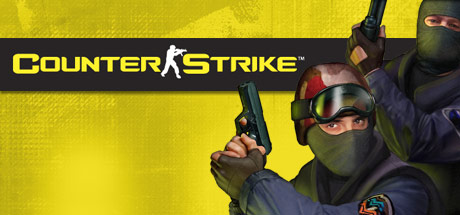
The original Counter-Strike, dating back to 2000, is the direct ancestor of everything CS2 does: terrorists and counter-terrorists, bomb sites, hostage rescues, and a buy-round structure that has survived every engine change since. Playing it now is a little like reading the first draft of a story you already know well.
We like it for the CS2 player who wants to understand where the series' round-based tension actually came from, stripped of twenty-plus years of refinement — no modern buy-menu polish, no updated movement, just the bare structure that's survived this long for a reason.
It's a bare-bones, much older shooter by modern standards, and its community is tiny next to CS2's. This is a curiosity for series history, not a game to replace your regular CS2 sessions with.

Call of Duty: Modern Warfare
For a bigger, faster team shooter
This Modern Warfare reboot originally launched in 2019 and only reached Steam in 2023 after an exclusive run through Battle.net — worth knowing so you don't mistake it for a brand-new release. It pairs a campaign and Special Ops co-op missions with a multiplayer built around loadouts, perks and killstreaks rather than CS2's round-by-round buys.
We'd choose it for a CS2 player who wants a faster, more forgiving team shooter — one where a bad round doesn't cost you your economy for the next one, and where unlockable loadouts give you more to chase between matches than CS2's weapon skins alone.
Respawning, perks and killstreaks replace CS2's single-life round economy almost entirely, so the careful, round-to-round decision-making that defines Counter-Strike isn't really the point here. Pick this when you want the tactical shooter feeling traded for something looser and more forgiving.