Our picks, beyond the numbers
5 games like DOOM Eternal we would recommend for different reasons
DOOM Eternal rarely lets you stand still. Every fight is a juggling act between ammo, health and armor, and the game keeps handing you new tools — the chainsaw, the flame belch, glory kills — to keep that juggling act moving instead of stalling into cover. That specific rhythm, more than demons or gore on their own, is what we looked for in these picks.
Doom is the obvious place to begin for more of that same aggression, but it isn't the only way to chase the feeling. Ultrakill and Prodeus push the speed and style further in their own directions, Dusk trades bombast for something stranger, and Wolfenstein II gives the same forcefulness a story to carry it. These are the games we'd point a DOOM Eternal player toward, and why.
Doom
Our first choice for more demon-slaying
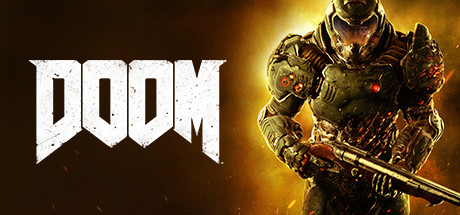
The 2016 Doom is where this version of the series started, and it's the most direct way back into the same world of glory kills, chainsaws and demon hordes. Its combat loop is the same basic idea Eternal builds on: stay aggressive, keep moving, and let finishing a weakened enemy up close refill what you're running low on.
We'd point a DOOM Eternal player here first because the fundamentals will feel immediately familiar, while the fights themselves are a notch less demanding. It suits someone who loved Eternal's aggression but wants a version of it with fewer simultaneous systems to track — less platforming, less resource triage, more straightforward arena combat.
The trade-off is that 2016's Doom doesn't ask as much of you. Eternal's verticality, its wider arsenal and its stricter ammo economy aren't here in the same form, so it can feel like a slightly gentler version of the same idea rather than a fresh challenge. If you want Eternal's full intensity again, look further down this list instead.
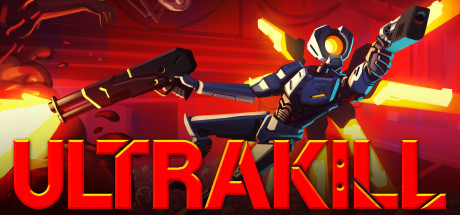
Ultrakill
For speed and style pushed even further
Ultrakill takes the idea of staying aggressive and turns it into the entire point. Movement options pile up fast, blood soaked from downed enemies becomes a health source, and a style-and-combo system rewards killing quickly and inventively rather than just killing safely. It's still in Early Access, building toward a planned third act, but the released chapters are substantial.
We like it for the DOOM Eternal player whose favorite part is the momentum: the feeling of a fight as a flow state rather than a series of discrete encounters. Chasing a better combo rank gives every room a reason to replay it, which suits someone who enjoyed Eternal's own emphasis on technique over brute force.
Its presentation is stylized and arcade-leaning rather than cinematic, and its systems (blood-for-health, a combo-driven currency) are built from scratch rather than inherited from Doom. If you want DOOM Eternal's specific tone and story, this isn't it — but if the appeal was the movement and the scoring, it's one of the strongest places to take that feeling next.

Prodeus
For a modern take on classic corridor shooting
Prodeus deliberately looks back to the 1990s boomer-shooter era — pixel-sprite enemies, chunky weapons, tight corridors — while running on modern lighting and effects. It's a more straightforward fight than Eternal's: fewer systems to juggle, more pure aim-and-clear combat.
We'd choose it for a player who wants DOOM Eternal's directness and gore without its platforming puzzles or its more elaborate resource management. It's a good match if what you actually missed was simple, satisfying gunplay in tight spaces.
It doesn't have Eternal's mobility tools, its glory-kill loop or its lore-heavy presentation. The appeal here is narrower and more old-school: a clean shooter rather than a system to master. Expect something closer to classic Doom's pace than Eternal's.

Dusk
For something stranger and more atmospheric
Dusk keeps the fast first-person combat but swaps DOOM Eternal's heavy-metal demon invasion for a quieter, weirder kind of dread — backwoods cults, unsettling locations and a retro, low-poly look that leans horror rather than spectacle.
We like it as a change of pace for someone who wants the speed and precision of Eternal's shooting, but is curious what that same skillset feels like in a stranger, more atmospheric setting instead of Eternal's bombastic sci-fi/fantasy mashup.
Its scale is smaller and its tone far less theatrical — there's no glory-kill economy or heavy metal soundtrack driving the pace. Choose Dusk when the mood you want is unease rather than aggression, and come back to Doom or Ultrakill when you want the intensity back.

Wolfenstein II: The New Colossus
For shooting with a story behind it
Wolfenstein II pairs forceful, id Tech-powered combat with a story about resistance against an occupying regime in an alternate-history America. The shooting carries real weight — dual-wielding, flanking, aggressive pushes — but it's wrapped around characters and a plot that DOOM Eternal keeps mostly in the background.
We'd recommend it to a player who liked Eternal's intensity but wants that energy spent on a game that cares more about its characters and narrative stakes along the way.
Its pacing is less about a continuous aggression loop and more about mission-based set pieces, and its tone is darker and more grounded despite the alternate-history premise. If story and character were never why you came to DOOM Eternal, this will feel like a different kind of game wearing a familiar genre.