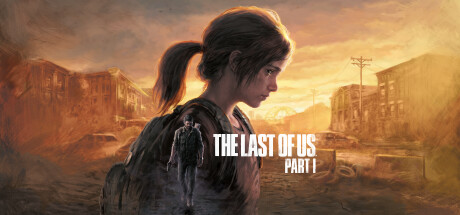
The Last of Us Part II Remastered
For the next chapter of the story
The sequel follows Ellie into a darker story about revenge and its consequences, years after the events of Part I. The core survival-action loop carries over, but the story pushes into much more morally uncomfortable territory than the first game does.
We'd start here if the characters and their fates are what you most want to return to — this is the most direct continuation available, picking up threads Part I leaves open.
Its story takes a considerably darker, more divisive direction and follows multiple perspectives rather than staying tightly focused on Joel and Ellie together. Go in expecting a heavier, more challenging emotional journey.

Days Gone
For a survivor on the road
Days Gone follows Deacon St. John, a drifter on a motorcycle, through a world of Freakers and desperate human survivors — a lone character's journey with room to explore the landscape between story beats, rather than Part I's more linear path.
We like it for players who want a character-led journey with a comparable sense of loss and desperation, but with more open space to explore and more large-scale threats to navigate around.
Its open world and motorcycle travel give it a different pace and structure than Part I's tightly directed path, and the relationships at its center are built differently — less a single central partnership, more a drifter slowly rebuilding trust with a community.

Metro Exodus
For a dangerous journey with companions
Metro Exodus takes Artyom and a train full of companions out of Moscow's tunnels and across a huge, hostile Russia, mixing survival-horror scarcity with a crew whose fate matters as much as the player's own.
We'd choose it for players who want that same sense of a group of people surviving together, with Part I's tension around scarce ammo and crafting carried into much larger, more varied environments.
Its first-person perspective and open, exploratory level design are a real departure from Part I's tightly scripted third-person path, and the ensemble cast spreads the emotional weight across more characters than Joel and Ellie's central pairing.

The Evil Within 2
For survival with a horror edge
The Evil Within 2 puts survival horror and a troubled protagonist — detective Sebastian Castellanos, searching for his daughter inside a collapsing mental construct — at the center of a frightening, semi-open adventure.
It's our pick if you want a stronger dose of horror alongside the character-driven stakes, with a father's search giving the scavenging and combat the same kind of emotional weight Joel and Ellie's bond provides.
Its surreal imagery and psychological horror are very different from Joel and Ellie's grounded, realistic world, and the structure is more semi-open than Part I's linear path. Expect a stranger, more unsettling tone throughout.

Death Stranding: Director's Cut
For a quieter kind of connection
Death Stranding makes delivering supplies across a fractured, post-apocalyptic America the core of its journey, with other players' structures — bridges, ladders, roads — appearing asynchronously in your world as a quiet, indirect form of connection.
We like it for the way travel itself becomes the challenge: the careful management of balance, cargo and terrain echoes the tension of Part I's journey, just reframed around reconnecting a broken world rather than protecting one person.
Its deliberate, delivery-focused structure has far less in common with Part I's conventional stealth-and-combat action — there's much less direct confrontation, and the emotional core is about isolation and indirect connection rather than one central partnership.