Our picks, beyond the numbers
5 games like Dark Souls III we would recommend for different reasons
Lothric doesn't explain itself, and that's deliberate: Dark Souls III hands you a weapon, a vague sense of purpose and a kingdom that would rather you figure out the rest by dying a few times. Its appeal splits roughly in two — the exacting, stamina-managed combat, and the slow pleasure of piecing together a world that treats lore as something to be excavated rather than told. We looked for games that carry one or both of those forward.
A few of these are the predictable next stops for a FromSoftware fan, and we're not going to pretend otherwise. Others come from studios building their own version of the same idea, sometimes in two dimensions, sometimes with a different weapon in hand entirely. Here's where we'd send a Dark Souls III player, and why.
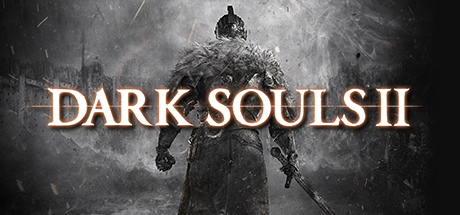
Dark Souls II
Our first choice for more of the same bones
Dark Souls II is the most direct sibling here: the same developer, the same fundamental stamina-and-positioning combat, and a dark fantasy kingdom just as willing to let you wander into something that kills you twice before you understand why. It adds its own wrinkles — notably a stat called Adaptability that affects your recovery speed, which earned it a reputation as the series' most divisive entry.
We'd point a Dark Souls III player here first precisely because so little needs re-learning: weapon arts aside, the fundamentals transfer directly, and the sense of a connected, unforgiving world is intact.
Its pacing and level design are generally considered less tightly constructed than Dark Souls III's, and some boss encounters lean on enemy gang-ups rather than single, readable fights. Go in expecting a rougher, more uneven version of the same idea rather than a strict improvement.

Dark Souls: Remastered
For a world that folds back on itself
Dark Souls: Remastered returns to Lordran, the original game's kingdom, running at 60fps with the Artorias of the Abyss DLC included. What made Lordran special — and what we think even Dark Souls III doesn't fully recapture — is how its areas interlock: a shortcut you open two hours in can completely change how you think about a zone you'd already written off as explored.
We'd choose this for a player whose favorite part of Dark Souls III was piecing together Lothric's geography, and who wants that specific pleasure taken even further, since Lordran's interconnected design is the thing the series is arguably still chasing.
It's an older, stiffer game underneath the remaster's visual polish, with input and animation timing that feel noticeably less refined than Dark Souls III's combat. Expect a slower, more deliberate pace as a trade for that tighter world design.

Elden Ring
For the same combat with a horse and an open map
Elden Ring keeps Dark Souls III's stamina management and boss-reading intact, then hands you a horse and an entire continent arranged so that almost any wall you can't yet break through has three other paths around it. It's the clearest example of FromSoftware taking this exact combat system and asking what it looks like without a linear gauntlet holding it together.
We'd recommend it to a Dark Souls III player who loved the fights but occasionally wished a frustrating boss had an alternative route to ride off and come back to later, rather than a wall you simply have to get better at breaking through.
That openness changes the rhythm considerably — progress depends more on exploration and optional detours than Dark Souls III's structured, one-kingdom-at-a-time path. If the tighter, more curated pacing is what you actually valued, the sheer size here can feel diffuse by comparison.

Mortal Shell
For a shorter, stranger take on the formula
Mortal Shell strips the Souls-like down to something tighter and odder: you don't build a character from scratch so much as possess the bodies of fallen warriors, called Shells, each with its own stats and playstyle, in a decaying world of cult sanctuaries.
Its signature trick is Harden — temporarily turning your Shell to stone mid-fight to block an attack and add weight to your own next swing — which gives combat a punctuation Dark Souls III's rolling and blocking don't quite have. We'd choose it for a player who wants that same tension in a much shorter, more concentrated package, including online co-op, which Dark Souls III doesn't offer outside of its competitive invasions.
There's no traditional leveling system here — you switch Shells instead of building a character stat by stat — and the whole experience is considerably shorter than Lothric's full campaign. Treat it as a dense, focused detour rather than an equivalent-sized adventure.

Salt and Sanctuary
For the formula reimagined in two dimensions
Salt and Sanctuary takes Dark Souls' stats, gear and bonfire-style rest points and compresses them into a 2D side-scroller — a cursed island with blood-soaked dungeons and over 600 weapons, armor pieces and spells to collect and upgrade.
We think it's an interesting next step for a Dark Souls III player curious what the exact same stamina-and-positioning logic feels like once spacing becomes a side-on, platforming problem instead of a three-dimensional one. It also supports local co-op, something Dark Souls III's cooperative play doesn't quite match in simplicity.
The flattened perspective changes dodging and spacing in ways that take real adjustment, and its presentation is considerably smaller in scale than Lothric's crumbling kingdoms. Expect a slower, more methodical feel in exchange for that fresh angle.