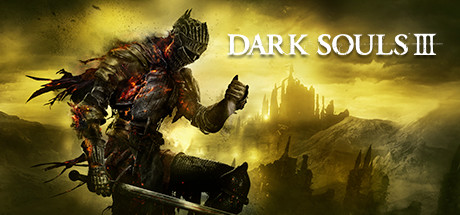
Dark Souls III
For deliberate, patient combat
Dark Souls III is one of the clearest ancestors of Lies of P's combat: deliberate movement, stamina management, and enemies that punish impatience more than poor reflexes. Learning an area well enough to approach a boss with confidence is the whole loop.
We'd start here if what you want next is more of that same patient, methodical fighting in a different dark fantasy world, with deep character-building options Lies of P doesn't offer in the same way.
Its setting and lore are built around Lothric rather than Krat, and its build variety — spells, weapon arts, covenants — goes considerably further than Lies of P's more streamlined systems. Expect more options for how you approach a fight, at the cost of some of Lies of P's tighter focus.

Sekiro: Shadows Die Twice
For learning the rhythm of a duel
Sekiro makes deflecting attacks at precise moments the center of nearly every fight, turning combat into a rhythm you have to learn rather than a stat check you can out-level. It shares Lies of P's emphasis on parrying and posture-style pressure, pushed to its most demanding form.
We like it for a player who enjoyed Lies of P's parry-focused fights specifically and wants that mechanic to be the entire game, with less room to fall back on raw stats or a different weapon.
There's a single fixed protagonist, no character build to shape, and the setting is feudal Japan rather than Krat's dark fantasy city. Its difficulty curve is also widely considered steeper — this is a narrower, more exacting test.

Steelrising
For mechanical enemies and an alternate history
Steelrising sends Aegis, a mechanical automaton, through an alternate-history Paris during a robotic uprising against the aristocracy. Like Lies of P's cast of puppets and automatons, it leans into a world where humanity and machinery blur together.
We'd choose it for someone who liked Lies of P's puppet-filled city and wants another action RPG built around a similarly mechanical protagonist and a reimagined historical setting.
Its combat systems and pacing are generally considered less tightly tuned than Lies of P's, and the French Revolution-inspired setting gives it a very different flavor from Krat's Pinocchio-inspired gothic city. Treat it as a curiosity in the same space rather than a direct equivalent.

Elden Ring
For challenge with room to roam
Elden Ring combines FromSoftware's demanding combat with an open world full of optional detours, letting you walk away from a fight that's going badly and come back stronger, or simply stumble onto something unexpected. It's a looser, more exploratory structure than Lies of P's linear path through Krat.
We'd pick it for a Lies of P player who wants the same core difficulty and build variety but also wants a much bigger place to explore between fights, with the freedom to tackle challenges in a different order.
Its open-ended structure and flexible leveling mean it asks less of you in the way of fixed progression — you can often out-level or out-gear a tough fight rather than purely out-skill it, which is a different balance from Lies of P's tighter design.

Another Crab's Treasure
For a lighter-looking challenge
Another Crab's Treasure follows a hermit crab named Kril through an underwater action-RPG, using discarded human trash as shells that double as armor. Its combat keeps the parry-and-dodge fundamentals of a soulslike, but wraps them in a colorful, comedic undersea world.
We like it for a player who wants Lies of P's combat skeleton without the unrelenting bleakness — it's still a real challenge, just told with a sense of humor Lies of P never reaches for.
Its tone, setting and sense of scale are a deliberate contrast to Lies of P's dark fantasy city: expect jokes, bright environments and a much lighter overall mood layered on top of a genuinely demanding combat system.