Our picks, beyond the numbers
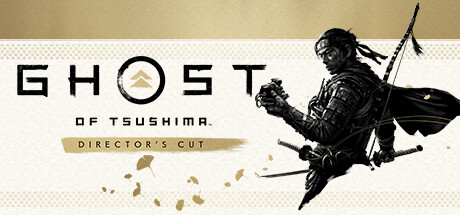
5 games like Ghost of Tsushima: Director's Cut we would recommend for different reasons
Ghost of Tsushima gives its samurai story room to breathe: a landscape shaped by war, duels that reward patience, and a protagonist torn between honor and doing what it takes to survive. We picked games that follow its swordplay, stealth or open-world adventure in different directions, rather than ones that simply share a historical setting.
Sekiro is the obvious destination for players chasing its combat specifically; others here lean into the exploration, the character-driven story, or the tension between two different approaches to a fight. Here's where we'd send a Ghost of Tsushima player next, and why.
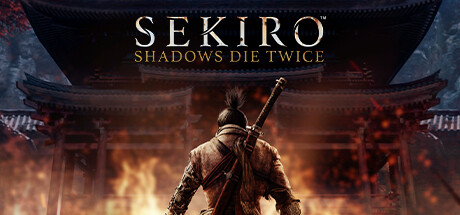
Sekiro: Shadows Die Twice
For a more demanding sword duel
Sekiro strips combat down to a posture system built around deflecting attacks at the right instant rather than managing stamina bars or dodge-rolling away. Learning an opponent's rhythm and answering it with a precise parry is the whole game, in a way Ghost of Tsushima's more forgiving stand-offs only hint at.
We'd choose it for a player who loved Jin's duels specifically and wants that one-on-one tension pushed to its most demanding, exacting form — less open-world freedom, far more focus on mastering a fight.
There's no open world to explore here, no stealth-optional approach to most encounters, and Sekiro's difficulty is considerably steeper. If what you want from Ghost of Tsushima is the wider island and its side stories, this narrower, harder focus will feel like a different game entirely.

Assassin's Creed Origins
For another historical world worth wandering
Assassin's Creed Origins sets its stealth, exploration and RPG progression in Ptolemaic Egypt, with a scale and density of things to find that rivals Tsushima's own island. Bayek's journey mixes investigation, combat and a slower, more personal story than the series had told before.
We like it for someone who enjoyed getting pulled off the main path on Tsushima by a fox den or a hot spring, and wants a different historical backdrop with the same density of detours.
Its combat and progression lean more heavily on RPG mechanics — gear levels, skill trees — than Tsushima's more direct stance-based swordplay, and stealth plays a bigger overall role. Expect a slower-paced, more systems-driven adventure.
God of War
For a character-led action adventure
God of War pairs weighty melee combat with a journey through Norse mythology, carried by the relationship between Kratos and his son Atreus. Like Jin's arc in Tsushima, it's a story about what a man is willing to become, told through a tightly controlled single camera shot and demanding fights.
We'd recommend it for a player who was drawn to Jin's internal conflict and Ghost of Tsushima's quieter character moments as much as its action — this puts that same kind of relationship and story front and center.
Its structure is far more linear and compact than Tsushima's open island, with no real equivalent to riding across a landscape discovering shrines and hot springs. Choose this when the story and the combat matter more to you than open exploration.

Aragami
For a stealthier approach
Aragami centers entirely on moving unseen: you play an undead assassin using shadow-based powers — teleporting between dark spots, turning invisible — to slip past or silently eliminate guards in an occupied city.
We'd choose it for a Tsushima player whose favorite moments were sneaking through enemy camps as the Ghost rather than standing and fighting as the samurai — this takes that half of Jin's toolkit and makes it the entire game.
There's no open world and no honorable-duel option here — direct confrontation is far riskier, and the game is built around stealth-first problem solving in discrete missions rather than Tsushima's freedom to choose your approach on the fly.

Middle-earth: Shadow of Mordor
For combat and an evolving rivalry
Shadow of Mordor combines fluid melee combat and stealth with the Nemesis system: orc captains who remember your previous encounters, rise in rank after beating you, and carry grudges that make the game's enemies feel personal rather than interchangeable.
We like it for a player who enjoyed Tsushima's mix of combat and stealth and wants a system that generates its own ongoing stories — rivalries that develop naturally, rather than being written in advance.
Its fantasy setting and more arcade-like combat are a real departure from Tsushima's grounded, historical samurai action, and there's no equivalent to Jin's slower, more personal narrative. The appeal here is systemic and emergent rather than authored.