Our picks, beyond the numbers
5 games like Sekiro: Shadows Die Twice we would recommend for different reasons
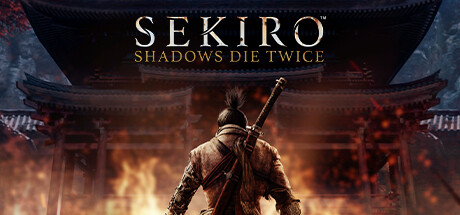
Sekiro asks a narrower question than most FromSoftware games: not how do I survive this fight, but how do I answer it. Posture, not health, decides most duels, and the whole game is built around learning an opponent's rhythm well enough to meet it with a deflection on instinct rather than a calculated guess. We looked for games that chase some piece of that — the precision, the setting, or the shinobi fantasy itself — rather than just more things to parry.
A couple of these come from the same genre's usual suspects; others approach the idea of mastering a duel, or moving unseen through a hostile world, from a different angle entirely. Here's where we'd send a Sekiro player next.

Nioh 3
Our first choice for demanding samurai combat
Nioh 3, released in February 2026, is Team Ninja's latest attempt at the same general space Sekiro occupies — an alternate Warring States Japan overrun by yokai, with combat that now lets you combine Samurai and Ninja fighting styles rather than committing to one stance for an entire encounter.
We'd point a Sekiro player here for the setting and the demanding swordplay, since both games share a real commitment to punishing impatience. Nioh 3's open-field structure also gives you more room to approach a fight from an angle, which Sekiro's more linear duels rarely allow.
Its combat system is built around stance-switching, ki pulse timing and loot-driven gear rather than Sekiro's single-minded posture-and-deflection focus, so the actual skill you're sharpening is noticeably different even though the setting rhymes.

The Surge
For a mechanical twist on demanding combat
The Surge trades feudal Japan for a ruined corporate complex, where you wake up on your first day at megacorporation CREO wearing a heavy-grade exoskeleton, just as the robots and rogue AI around you turn hostile. Its signature idea is limb targeting: you slice specific limbs off enemies and loot what you dismember, then craft weapons and armor from the parts.
We like it for a Sekiro player who wants that same demanding, read-the-enemy combat, but is curious what it feels like once gear and limb-by-limb loot decisions enter the equation instead of a fixed moveset and prosthetic tools.
There's no posture system or deflection mechanic here — survival leans more on positioning and target selection than Sekiro's parry-centric rhythm, and the sci-fi corporate setting is a world away from Sekiro's historical Japan.

Mortal Shell
For a shorter, stranger duel
Mortal Shell gives you possession of fallen warriors' bodies — Shells, each with different stats — rather than one fixed protagonist, and its Harden ability lets you turn to stone mid-swing to block an attack and punish the opening that follows.
We'd choose it for someone who liked the idea of a tense, skill-first duel in Sekiro but wants a shorter, more contained adventure, with the option of online co-op that Sekiro doesn't offer at all.
Its decaying, cult-haunted world and stone-form defense feel nothing like Sekiro's feudal Japan or posture-breaking combat, and there's no equivalent to the prosthetic arm's toolkit of gadgets. Treat it as a different kind of demanding rather than a close cousin.

The Surge 2
For the same idea with more room to explore
The Surge 2 keeps its predecessor's limb-targeting combat and crafting loop, but opens the world up considerably: Jericho City is a sprawling, open sci-fi setting under martial law, bigger and more varied than the first game's corporate complex.
We'd recommend it to a Sekiro player who wants the same mechanical, read-the-enemy combat but with a more open, explorable map to move through between fights, closer in spirit to how Sekiro's own areas interconnect, though in an entirely different setting.
Its character customization — weapons, armor, implants and drones — gives you far more build variety than Sekiro's fixed protagonist allows, and the sci-fi, nanostorm-ravaged city has nothing in common tonally with Sekiro's historical world.
Ghost of Tsushima: Director's Cut
For swordplay with an open island to explore
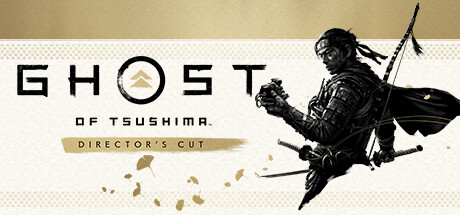
Ghost of Tsushima follows Jin Sakai, one of the last survivors of his clan, defending Tsushima Island against the first wave of the Mongol invasion in the late 13th century. Its sword duels reward patience in a way that will feel familiar to Sekiro players, even though the systems underneath are different, and its open world gives Jin's story room to breathe between fights.
We'd choose it for someone who loved Sekiro's focus on the blade but wants an open island to ride across, with side stories, hot springs and shrines tucked into the landscape rather than Sekiro's tightly directed path from one duel to the next.
There's no posture-and-deflection system here — duels are built around timed stances and a more forgiving standoff mechanic — and the open-world structure is a real departure from Sekiro's linear, mission-by-mission design. Go in for the setting and the swordsman's story, not an equally exacting duel.