Our picks, beyond the numbers
5 games like Satisfactory we would recommend for different reasons
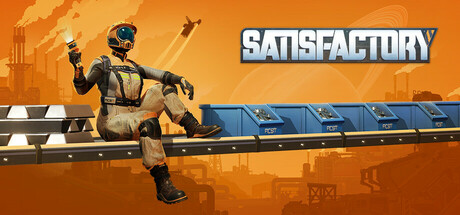
Satisfactory's whole appeal lives in the gap between a messy first blueprint and the sprawling, self-sustaining machine it eventually becomes. You're rarely just building one thing — you're redesigning a belt line for the third time, discovering a bottleneck two tiers back, and feeling genuinely proud when a factory finally runs itself. We looked for games that chase some piece of that same loop, whether that means the same first-person view and belts, or automation stripped down, scaled up, or wrapped in real survival pressure instead.
A couple of these are the genre's most obvious names; others take the automation itch somewhere Satisfactory itself doesn't go, whether that's an entire star system, a timed survival expedition, or a gentler, more exploratory pace. Here's where we'd send a Satisfactory player next.

Foundry
Our first choice for the same first-person factory feel
Foundry, from Channel 3 Entertainment and Paradox Interactive, drops you on an unexplored, procedurally generated voxel planet to build an automated robot production facility, guided along the way by an AI companion. Its Early Access build already has you harvesting resources by hand before stringing together conveyor belts, pipes and assembly lines to get a production chain running on its own.
We'd point a Satisfactory player here first, since it's the closest match on this list: the same first-person view, the same cycle of researching new tech to unlock the next tier, and the same online or LAN co-op for building together. Digging your own tunnels through an infinite voxel world also gives the terrain a different texture than Satisfactory's fixed alien planet.
It's worth knowing this is still Early Access, and the developers themselves describe multiplayer as a bit less stable than solo play for now. If you want a finished, polished equivalent rather than a game still being built out, that's the trade-off here.
Factorio
For the game that started this whole genre
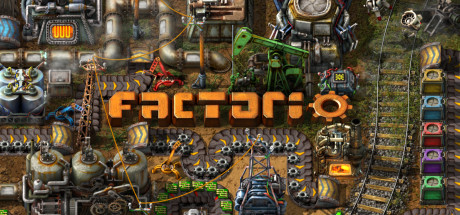
Factorio is the game that popularized automation as its own genre, years before Satisfactory brought the idea into first-person 3D. You mine, smelt and build belts from a top-down view, and the entire appeal is the logistics puzzle: routing resources, balancing throughput and untangling the bottleneck that's quietly capping your factory's output.
We'd recommend it to a Satisfactory player who wants that same optimization itch distilled down to its purest form, without an avatar to walk around or a planet to explore. It rewards exactly the same kind of thinking — redesigning a line you built an hour ago because you've finally spotted a smarter layout.
The trade-off is total: there's no first-person exploration, no building to walk through and admire, and no combat at all. If what you loved about Satisfactory was wandering its alien landscape as much as the factory itself, that half of the appeal isn't here.
Dyson Sphere Program
For automation at an entire star system's scale
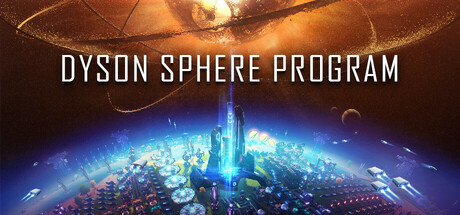
Dyson Sphere Program takes the belt-and-factory idea and stretches it across an entire solar system, tasking you with building production chains on multiple planets in service of constructing a literal Dyson sphere around a star. It's been in Early Access since January 2021, with a more zoomed-out camera than Satisfactory's grounded, first-person perspective.
We'd choose it for a Satisfactory player whose favorite part is watching a factory's scale snowball — this is that feeling taken to an interplanetary extreme, with logistics that eventually span moons and solar collectors instead of one factory floor.
It's single-player only, so the co-op side of Satisfactory isn't here, and the camera's distance changes how it feels to actually build: you're managing a system from above rather than standing inside your own factory.

Icarus
For automation under real survival pressure
Icarus, from RocketWerkz, sends prospectors down from an orbital station for timed expeditions onto a planet with, as its own store page puts it, a temper — toxic air, apex predators, storms and forest fires all included. You mine, craft and hunt during a drop, then trade what you've earned back in orbit for gear that makes the next trip a little less dangerous. It supports solo play or co-op for up to eight.
We'd recommend it to a Satisfactory player who wants their building interrupted by genuine stakes — managing oxygen and stockpiling supplies for a trip adds a layer of pressure that Satisfactory's comparatively safe planet never really applies.
Its timed Missions structure is a real departure from Satisfactory's open-ended, persistent factory: you're working toward escaping before time runs out rather than building something that simply keeps running. Open World Operations soften that pressure somewhat, but the core rhythm is still expedition-based, not endless.

Astroneer
For a softer, more playful take on the same urge
Astroneer swaps Satisfactory's belts for a friendlier, more exploratory take on automation across a handful of colorful alien planets, where you can reshape terrain by hand as easily as you build on it. Online co-op is built in from the start, with no separate setup required.
We'd point a Satisfactory player here when exploration matters as much as, or more than, optimizing a production line — Astroneer leans toward wonder and discovery first, with automation as something you grow into rather than the entire point.
Its systems are considerably simpler than Satisfactory's deep tech tree and multi-tier production chains, so don't expect the same late-game complexity. Treat it as a gentler cousin rather than a direct replacement for Satisfactory's industrial ambition.